

Seskin Solar Farm is a proposed renewable energy development located across approximately 80.8 hectares of agricultural land within the townlands of Ballyryan West, Lisheennnamalausa, Gortdrum, and Barnanalleen, Co. Tipperary. Designed by Power Capital, the project will generate clean, renewable electricity while supporting Ireland’s climate and energy targets.
The project will deliver long-term environmental, community, and economic benefits, creating a positive contribution for the local area and the wider region.


Project Information
The proposed development, known as Tibbotstown Solar Farm & Battery Energy Storage System (BESS), is located across the townlands of Condonstown, Pigeonhill, Aghaduff, Ballynabrannagh East, Ballynabrannagh West, Ballyvatta, Lysaghtstown, Ballinbrittig, Ballyleary, Ballynakilla, Cloneen, Garranes, Lackenbehy, Dooneen, and Woodstock, Co. Cork.
The solar farm site covers 118.43 hectares across four separate land parcels. It includes the installation of solar PV panels, a BESS, underground grid connections, and associated infrastructure to generate and store renewable electricity.
Benefits from this project
The Seskin Solar Farm will deliver long-term benefits for the local area and wider region:
- Agriculture can continue beneath and between the panels, allowing for dual land use.
- Local job creation will support employment during construction and ongoing maintenance.
- The project will help Ireland meet its renewable energy and emissions targets.
- Biodiversity will be enhanced through new habitats, wildlife buffers, hedgerow infill, bat and bird boxes, and meadow management.
- The development will support the local economy by providing rural diversification and long-term investment.
Design & Infrastructure
The Seskin Solar Farm will deliver long-term benefits for the local area and wider region:
- Ground-mounted PV panels on galvanised steel frames
- Inverters mounted on selected panel frames
- Transformer stations
- Underground cabling
- Internal access tracks and upgraded site entrances
- Perimeter security fencing and CCTV
- A temporary construction compound
- Landscape planting and ecological enhancements
More details about the proposal can be viewed by visiting our Virtual Consultation Room at the link below.
Project Information
Seskin Solar Farm is a proposed renewable energy development located on 80.8 hectares of agricultural land in Ballyryan West, Lisheennnamalausa, Gortdrum, and Barnanalleen, Co. Tipperary. Planning permission is sought for a 10-year construction period, followed by up to 40 years of operation before full decommissioning.
The project includes ground-mounted solar panels, inverter and transformer units, internal access tracks, underground cabling, landscaping, biodiversity enhancements, and all associated site works. The development will connect to the Cauteen electrical substation, with the grid connection forming part of a separate application.
Project Timeline
Planning permission is sought for a 10-year construction period, followed by up to 40 years of operation before full decommissioning.
More detailed information on the planning process can be found in the Application Process section below.
Project Sitemap
Site boundaries highlighted for easy reference alongside local road connections.
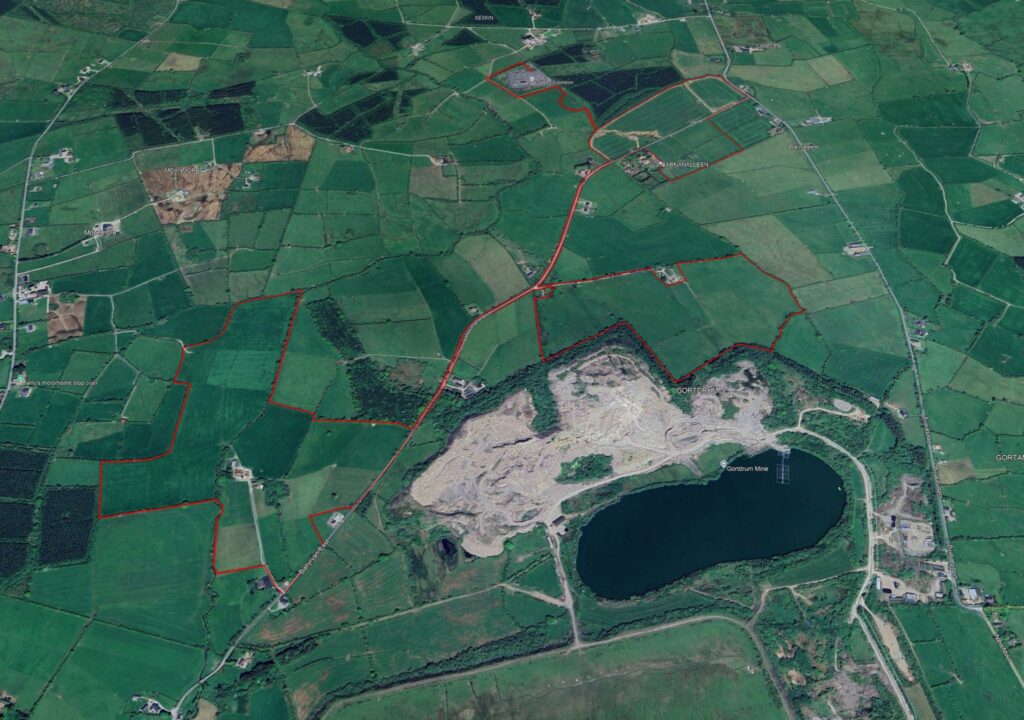
The proposed development consists of a 10-year planning permission for the construction of, and a 40-year operation and subsequent decommissioning of, a development consisting of a 118.43-hectare solar farm.
Supporting Information
The design of the solar farm is directly informed and guided by extensive range of survey data collected from the site. The application will be accompanied by supporting information including: Planning and Environmental Considerations Report that examines the potential impacts of the solar farm in respect of:
- Population
- Biodiversity
- Water
- Noise
- Landscape and Visual
- Cultural Heritage
- Traffic and Transport
Application Process
Construction Environmental Management Plan (that will finalised and agreed with the County Council before any construction work takes place)
- Restoration/decommissioning plan
- Appropriate Assessment Screening Report /Natura Impact Statement
- Glint and Glare Assessment
- Landscape Management Plan
At Seskin Solar Farm, our goal is to generate clean, renewable energy while delivering long-term benefits for the local community and environment. Through open communication and regular project updates, we aim to ensure the development reflects local priorities and provides meaningful value for everyone.
Can the land be used for agriculture?
Yes. There is enough space below and around the panel arrays to enable grazing by small farm animals such as sheep.
Will the solar farm be noisy?
How long will it take to build the solar farm?
Construction typically takes 12 months.
Will there be an increase in traffic?
Will there be glint or glare from solar panels?
What security measures will there be?
Will the solar farm help biodiversity?
What happens when the operation of the solar farm ends?
Will the value of my property be devalued?
What is Community Benefit Fund
A Community Benefit Fund (CBF) is a government‑mandated fund linked to RESS (Renewable Electricity Support Scheme) solar projects. These funds provide long‑term financial support to communities located near renewable energy developments.
What is Community Benefit Fund?
A Community Benefit Fund (CBF) is a government‑mandated fund linked to RESS (Renewable Electricity Support Scheme) solar projects. These funds provide long‑term financial support to communities located near renewable energy developments.
What is the purpose of CBF?
How does CBF support communities?
Funding continues for 15 years from the project’s commercial operation date, creating stable and predictable support for local communities. The fund supports local community projects, prioritising not‑for‑profit organisations and initiatives aligned with the UN Sustainable Development Goals.
How is CBF governed?
A Community Benefit Fund Committee – made up of community representatives, the developer, and the fund administrator – manages the fund and ensures transparency, governance and collaboration.
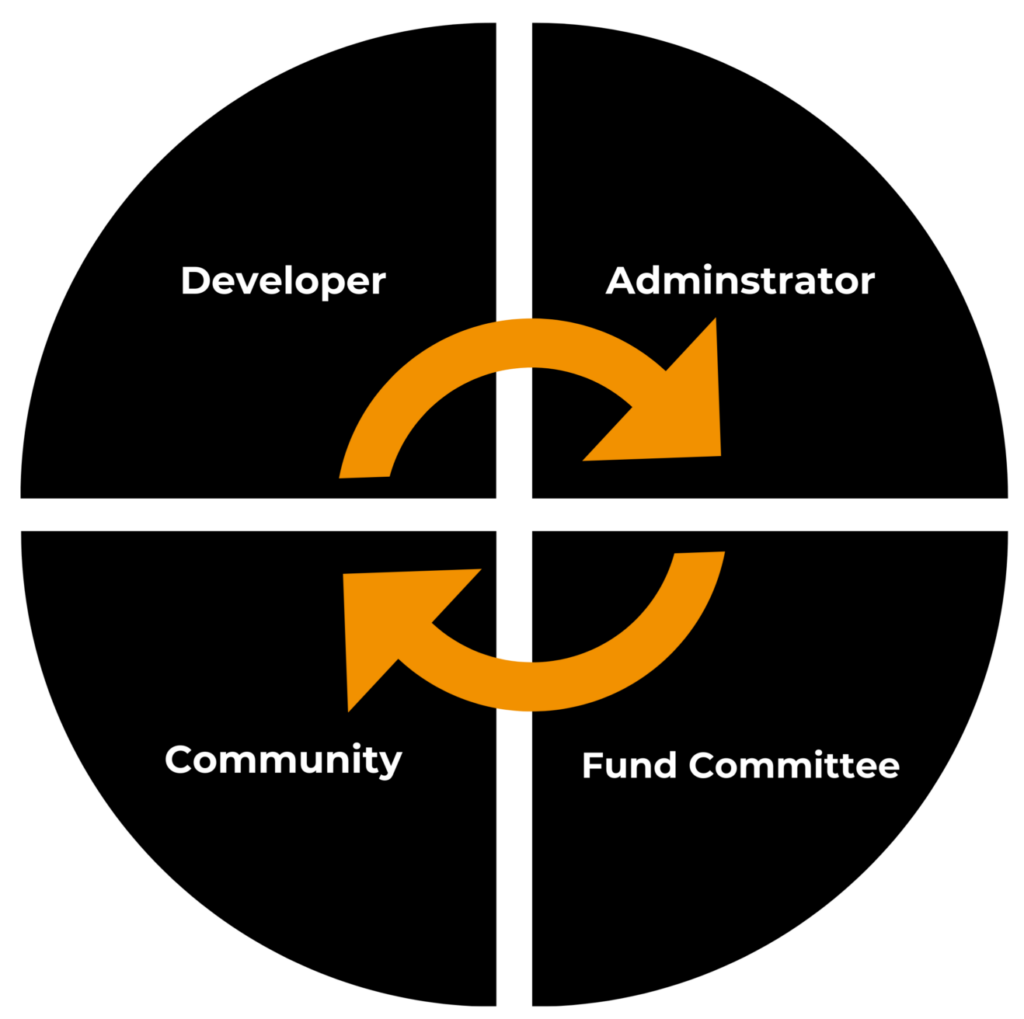
Developer
- Develops and delivers the project
- Appoints the Fund Administrator
- Reports annually on outcomes
- Oversees overall governance
Administrator
- Supports the Fund Committee
- Develops the funding strategy
- Implements committee decisions
- Ensures governance compliance
Community
- Provides volunteers for committees
- Submits funding applications
- Delivers approved local projects
- Benefits from funded activity
Fund Committee
- Includes Developer, Administrator and Community
- Sets funding goals and strategy
- Reviews and approves applications
- Operates under RESS governance
How does it work?
The Community Benefit Fund (CBF) is designed to support local communities located near RESS‑supported solar farm projects. The process is transparent, structured and aligned with national guidelines for community funding.
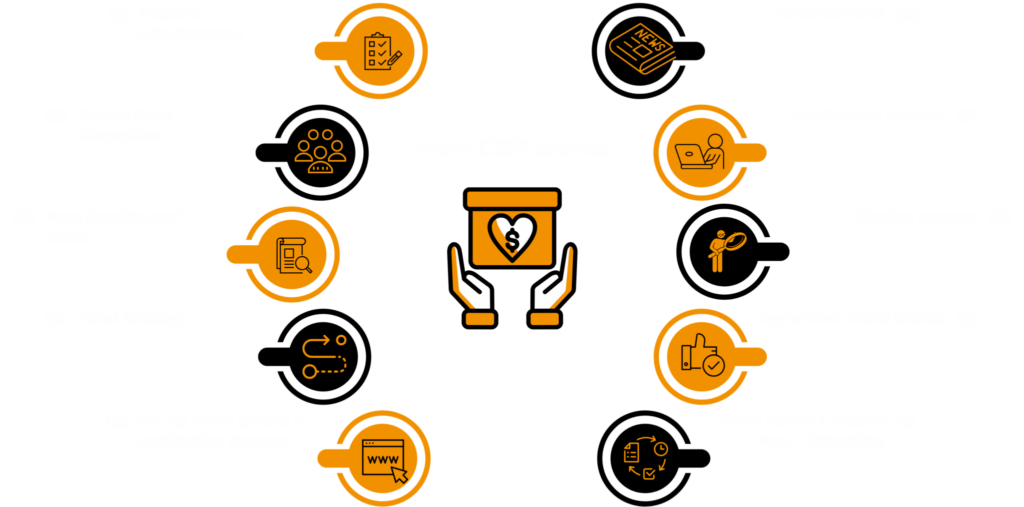
Here’s how the CBF process works from start to finish:
1. Appoint Administrator
The developer first appoints an independent Fund Administrator to oversee the process. This step ensures governance and compliance from the start.
2. Create the Fund Committee
Next, a Committee is formed. It includes community representatives, the developer and the administrator. As a result, local voices are part of every decision.
3. Scope the Area and Collaborate
The Committee then identifies community needs, meets local groups and gathers insights. This collaboration helps shape meaningful funding priorities.
4. Develop the Fund Strategy
After scoping, the Committee sets the fund’s strategy, eligibility criteria and objectives. This creates a clear roadmap for the funding round.
5. Set Up the Application Hub
The administrator promotes the fund across local channels. This makes the process simple and accessible.
6. Advertise the Fund
The fund is then advertised across local channels so all eligible groups are aware and encouraged to apply.
7. Application Process
Community groups submit their funding applications through the online portal. This step begins the formal review.
8. Review and Assessment
The Committee reviews every application using agreed criteria. As a result, all decisions remain fair, consistent, and transparent.
9. Agree and Award Grants
Approved projects receive funding based on impact, alignment with community needs and available budget.
10. Fund Administration and Reporting
Finally, the administrator manages payments and reporting, while funded groups deliver their projects and submit progress updates.
This step‑by‑step process ensures that funding is fair, transparent and impactful, supporting long‑term community wellbeing and projects aligned with Ireland’s renewable energy goals.
Site boundaries highlighted for easy reference alongside local road connections.
Call
Call us on +353 1 685 2858.
We’re around Monday to Friday,
9:00AM to 5:00PM
Email us directly at
info@powercapital.ie
Visit
86-88 Lower Leeson Street
Dublin 2, Ireland,D02 A668
How can we help? Let us know below and we’ll get back to you soon.