

Designed with both the environment and community in mind, the development will deliver lasting benefits — from local job opportunities to biodiversity improvements — while contributing to national climate goals


Project Information
The proposed development, known as Tibbotstown Solar Farm & Battery Energy Storage System (BESS), is located across the townlands of Condonstown, Pigeonhill, Aghaduff, Ballynabrannagh East, Ballynabrannagh West, Ballyvatta, Lysaghtstown, Ballinbrittig, Ballyleary, Ballynakilla, Cloneen, Garranes, Lackenbehy, Dooneen, and Woodstock, Co. Cork.
The solar farm site covers 118.43 hectares across four separate land parcels. It includes the installation of solar PV panels, a BESS, underground grid connections, and associated infrastructure to generate and store renewable electricity.
Benefits from this project
The Tibbotstown Solar Farm will bring long-term value to the local area and beyond. Some of the key benefits include:
- Local job creation – Supporting employment opportunities during construction and ongoing operations.
- Lower carbon footprint – Helping to reduce CO₂ emissions by approximately 25,000 tonnes each year.
- Enhancing biodiversity – protecting local heritage, and designing the project to blend with the landscape.
More details about the proposal can be viewed by visiting our Virtual Consultation Room at the link below.
Project Timeline
The planning application for the Hiskinstown Solar Farm was submitted to Westmeath County Council in May 2025. Subject to approval, the permission will allow for a construction period and full build‑out over a 10‑year timeframe.
More detailed information on the planning process can be found in the Application Process section below.
Project Sitemap
The total landholding extends to 299 hectares (blue line boundary), with the active development area covering 118.43 hectares (red line boundary). Of this, the solar panels and associated works will occupy approximately 44 hectares, representing around 37% of the development area.
The site consists mainly of agricultural land, with existing hedgerows and trees. These will be largely retained, with gaps filled and replacements planted where necessary.
Project Sitemap
An overview map showing the project boundaries and key local roads for context.
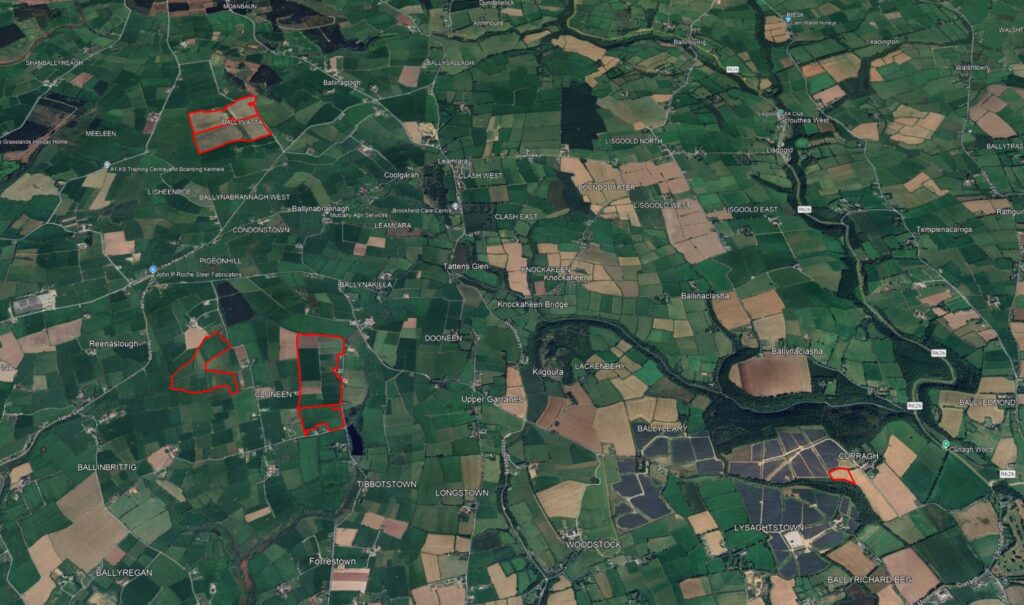
The proposed development consists of a 10-year planning permission for the construction of, and a 40-year operation and subsequent decommissioning of, a development consisting of a 118.43-hectare solar farm.
Supporting Information
The design of the solar farm is directly informed and guided by extensive range of survey data collected from the site. The application will be accompanied by supporting information including: Planning and Environmental Considerations Report that examines the potential impacts of the solar farm in respect of:
- Population
- Biodiversity
- Water
- Noise
- Landscape and Visual
- Cultural Heritage
- Traffic and Transport
Application Process
Construction Environmental Management Plan (that will finalised and agreed with the County Council before any construction work takes place)
- Restoration/decommissioning plan
- Appropriate Assessment Screening Report /Natura Impact Statement
- Glint and Glare Assessment
- Landscape Management Plan
At Tibbotstown Solar Farm, our goal is to deliver clean, renewable energy while creating lasting benefits for the local community and environment. By listening, sharing updates, and engaging openly, we can ensure the solar farm reflects local priorities and provides real value for everyone.
Can the land be used for agriculture?
Yes. There is enough space below and around the panel arrays to enable grazing by small farm animals such as sheep.
Will the solar farm be noisy?
How long will it take to build the solar farm?
Construction typically takes 12 months.
Will there be an increase in traffic?
During construction there will be some increase in traffic movements in the areas but the process will be managed through a Construction Traffic Management Plan that will be agreed with the County Council to ensure that any disruption is kept to a minimum. Once operational, there will be 1 or 2 maintenance visits per month using light goods vehicles.
Will there be glint or glare from solar panels?
What security measures will there be?
Will the solar farm help biodiversity?
What happens when the operation of the solar farm ends?
Will the value of my property be devalued?
What is Community Benefit Fund
A Community Benefit Fund (CBF) is a government‑mandated fund linked to RESS (Renewable Electricity Support Scheme) solar projects. These funds provide long‑term financial support to communities located near renewable energy developments.
What is Community Benefit Fund?
A Community Benefit Fund (CBF) is a government‑mandated fund linked to RESS (Renewable Electricity Support Scheme) solar projects. These funds provide long‑term financial support to communities located near renewable energy developments.
What is the purpose of CBF?
How does CBF support communities?
How is CBF governed?
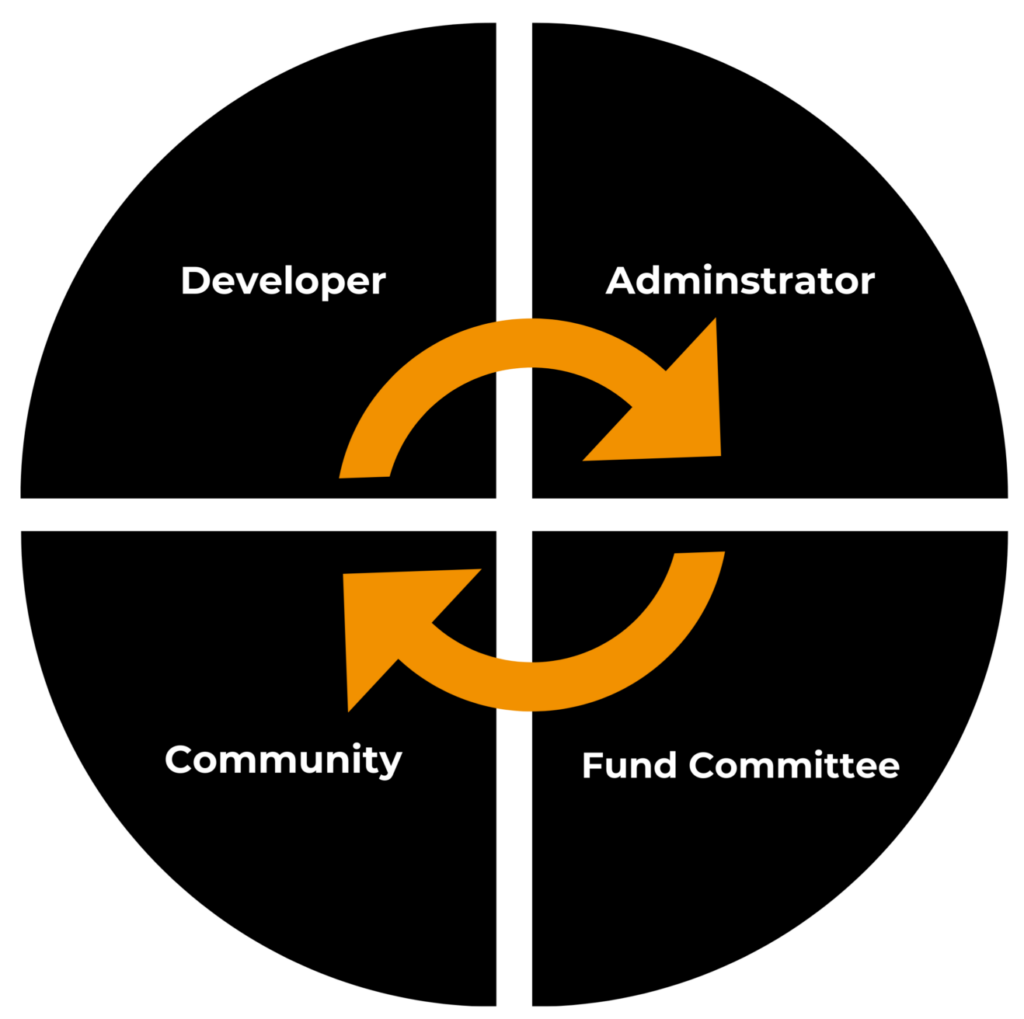
Developer
- Develops and delivers the project
- Appoints the Fund Administrator
- Reports annually on outcomes
- Oversees overall governance
Administrator
- Supports the Fund Committee
- Develops the funding strategy
- Implements committee decisions
- Ensures governance compliance
Community
- Provides volunteers for committees
- Submits funding applications
- Delivers approved local projects
- Benefits from funded activity
Fund Committee
- Includes Developer, Administrator and Community
- Sets funding goals and strategy
- Reviews and approves applications
- Operates under RESS governance
How does it work?
The Community Benefit Fund (CBF) is designed to support local communities located near RESS‑supported solar farm projects. The process is transparent, structured and aligned with national guidelines for community funding.
The proposed Tibbotstown Solar Farm will benefit from participation by all interested parties during each stage of the development. To make a comment or obtain further information about the project, please complete the contact form below and a member of our team will respond as soon as possible.
Call
Call us on +353 1 685 2858.
We’re around Monday to Friday,
9:00AM to 5:00PM
Email us directly at
info@powercapital.ie
Visit
86-88 Lower Leeson Street
Dublin 2, Ireland,D02 A668
How can we help? Let us know below and we’ll get back to you soon.